Poop Got Weird: A Designer’s Review
As an embroidery designer who has spent years digitizing files for boutique brands and large-scale commercial operations, I approach every new machine embroidery design with a critical eye. It is not just about whether the artwork looks cute on a screen; it is about how that design translates to fabric, how it holds up under industrial washing, and most importantly, how it serves the brand identity of the small business owner purchasing it. Today, I am reviewing Poop Got Weird Emoji Embroidery, a piece that sits squarely in the Friends Quotes category but offers unique potential for modern, playful branding.
First Impressions and Visual Personality
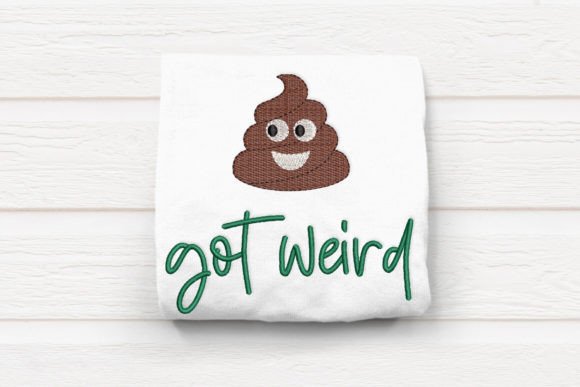
The immediate reaction to Poop Got Weird Emoji Embroidery is one of amused recognition. The concept replaces a typically naughty swear word with a poop emoji, creating a phrase that is edgy yet safe for general audiences. This balance is crucial for small business merch. It feels friendly, bold, and undeniably playful. For brands that want to project a sense of humor without crossing into offensive territory, this design hits a sweet spot. It does not aim for elegance or rustic charm; instead, it leans into a modern, digital-native aesthetic that resonates with younger demographics and creative industries.
From a technical standpoint, the description notes that stitching order steps are separated by color changes. This is a vital detail for production efficiency. As a designer, I appreciate when files are structured logically, as it reduces thread breaks and simplifies the trimming process for the operator. However, the visual impact relies heavily on the execution of that emoji. If the digitizing is tight and the satin stitches are smooth, the result will look premium. If the density is too high, you risk puckering on lighter fabrics.
Real-World Applications for Small Businesses
Where does this design actually belong in a product lineup? It is versatile, but context is everything. Imagine a local coffee shop or a quirky bakery looking to update their staff uniforms. An apron embroidery featuring this phrase adds personality to the service experience. It breaks the ice with customers and signals that the brand does not take itself too seriously. Similarly, for a pet grooming studio or a veterinary clinic, this could work as a fun accent on tote bags given away during adoption events.
For Etsy sellers and handmade product creators, this design shines as an embroidered patch. Patches allow for maximum flexibility. You can sew them onto denim jackets, canvas backpacks, or even laptop cases. Because the design is self-contained, it works well as a standalone asset. It also serves as excellent small business merch for creative studios, graphic designers, or social media managers who appreciate internet culture references. When used on a tote bag design, it transforms a generic utility item into a conversation starter.
Consider also the use in custom apparel for team-building events or casual Fridays. A simple crewneck sweatshirt with this design on the left chest creates a sense of camaraderie. It is specific enough to feel exclusive to the group wearing it, yet universal enough to be understood instantly. This kind of commercial embroidery project thrives on relatability.
Technical Considerations and Placement Strategy
While the concept is strong, the physical application requires careful planning. The biggest challenge with emoji-based designs is maintaining clarity at smaller sizes. If you attempt to place Poop Got Weird Emoji Embroidery on a cap front, you must ensure the hoop size accommodates the width of the text and the icon without distortion. Cap embroidery involves curved surfaces, which can stretch the design if not stabilized properly. I recommend using a stiff cut-away stabilizer to maintain the integrity of the letters and the emoji shape.
Stitch density is another critical factor. Emojis often require solid fills to look vibrant. If the density is too high, the fabric may pucker, especially on lightweight cottons or poly-blends used in t-shirts. Always test the digital embroidery file on a scrap piece of the actual production fabric. Check the thread colors against the garment. A bright yellow poop emoji needs high contrast to pop against dark navy or black uniforms. If the contrast is low, the design loses its impact and looks muddy from a distance.
Furthermore, consider the washing instructions. Items like aprons and work shirts undergo frequent, rigorous laundering. Ensure that the thread quality matches the durability requirements of the end-use. Rayon threads offer shine but may fade faster than polyester. For a professional finish that lasts, polyester is often the safer bet for commercial items.
Brand Identity and Customer Engagement
Incorporating humor into your brand assets can significantly boost customer engagement. Poop Got Weird Emoji Embroidery acts as a signal of authenticity. In a market saturated with generic corporate logos, a touch of whimsy humanizes the brand. It suggests that the business owners are approachable and in tune with current cultural trends. This can enhance brand identity by making the company feel more like a community member than a faceless entity.
However, professionalism must still be maintained. The quality of the stitch-out reflects directly on the perceived value of the product. A sloppy embroidery job undermines the humor and makes the brand look cheap. Conversely, a crisp, clean stitch-out elevates the joke into a desirable fashion statement. This is where the role of the embroidery designer is pivotal. We must ensure that the design assets we provide are optimized for various fabric textures and hoop sizes.
Practical Designer Notes for Production
Before running a full batch of this design, follow these practical steps to ensure success:
- Test in Black and White: Before committing to colorful threads, stitch out a monochrome version to check for clarity and spacing issues.
- Check Small Patch Viability: Verify that the details of the emoji remain distinct when scaled down for smaller patches or labels.
- Review Thread Color Contrast: Ensure the emoji colors stand out against your chosen garment shades. Use a color chart for accuracy.
- Inspect Spacing: Look for gaps between the text and the emoji that might cause registration issues during stitching.
- Confirm Hoop Size: Make sure your machine’s hoop can accommodate the full width of the design without re-hooping.
- Test on Real Fabric: Never rely solely on screen simulations. Stitch on the actual material to check for puckering or pull.
- Use Proper Stabilizer: Match the stabilizer type to the fabric weight to prevent distortion.
- Create a Printable Mockup: Show clients a realistic preview of how the design will look on their specific product before production begins.
- Compare Beside Other Assets: Ensure this design aligns visually with your existing brand elements and other merchandise.
- Confirm Commercial Licensing: Always verify the license terms of the digital embroidery file to ensure it covers commercial sales and mass production.
In conclusion, Poop Got Weird Emoji Embroidery is a viable asset for businesses looking to inject personality into their merchandise. It bridges the gap between internet culture and tangible products. By paying attention to technical details like stitch density, stabilizer choice, and placement, you can transform a funny quote into a high-quality branded item that customers love to wear and use. Always prioritize the finished product quality to maintain trust and professionalism in your craft.